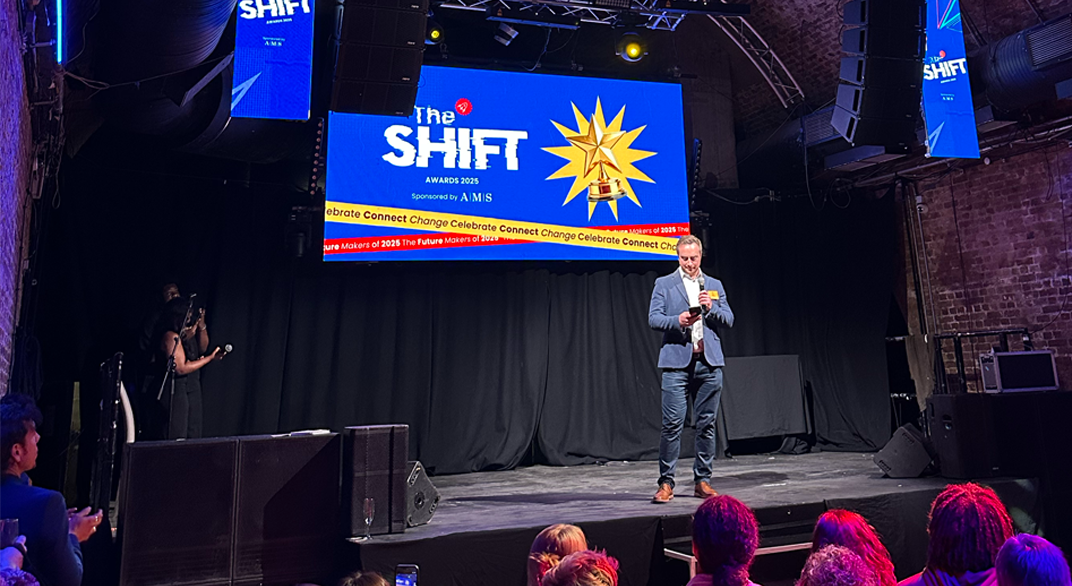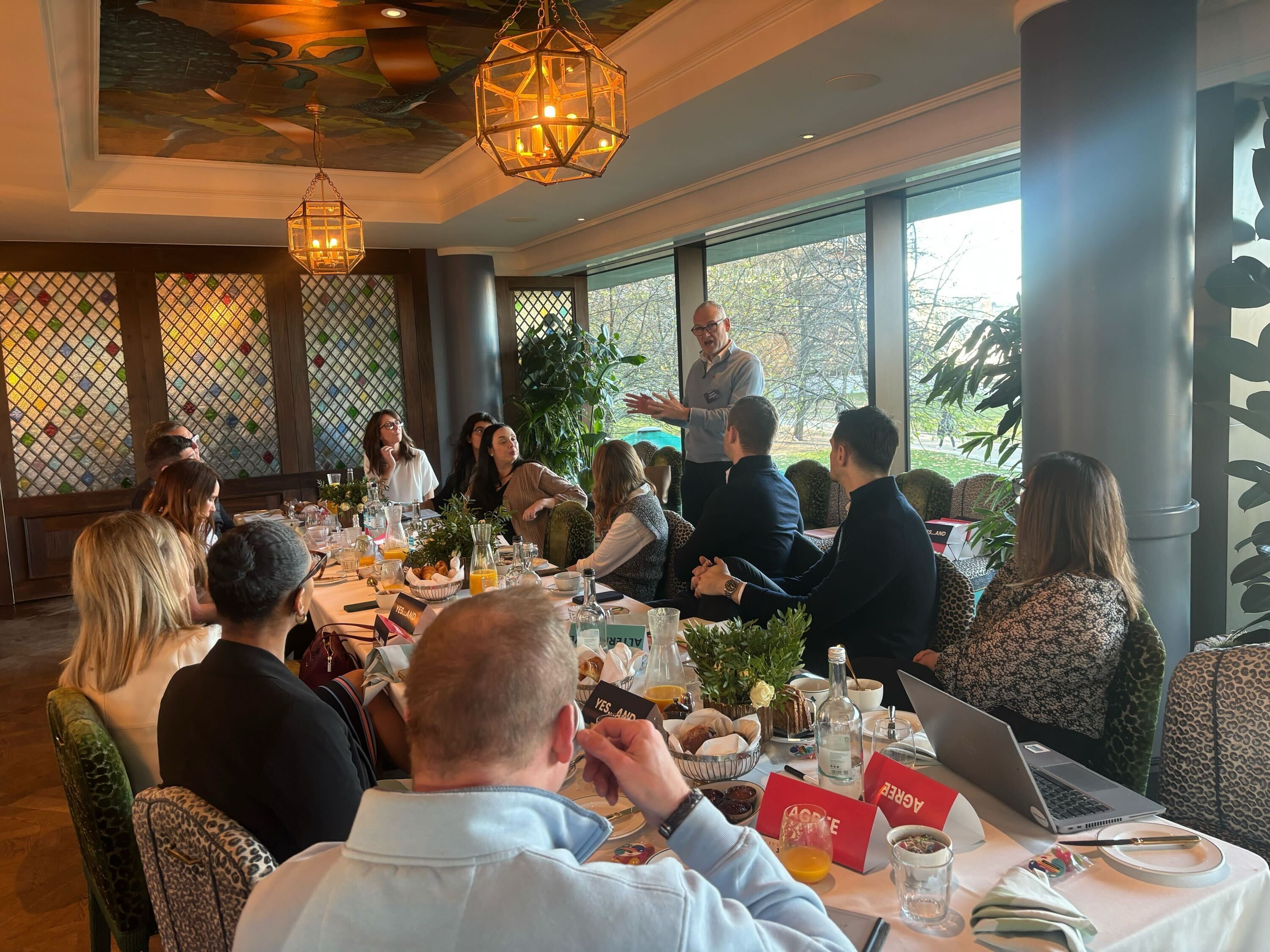


As The Baroness Fairhead reminded us in her opening remarks, we’re living in one of the toughest job markets for young people. Applications outnumber the amount of roles by the millions and as Springpod’s CEO shared, only 36% of UK students currently gain in-person work experience before leaving school.
The young people in the room shared some refreshingly honest stories on their experiences and what they need from us. The question we all need to answer is how can we take those needs and turn them into action?
What do young people want?
Members of Springpod’s Future Makers Youth Advisory Board took the stage first, with perspectives ranging from college students, university students and degree apprentices.
They shared their perspectives as young people trying to gain work experience, with some stand out struggles:
- The experience not being what was promised
- The lack of feedback from employers making it difficult to improve applications
- Recognising experience over potential
- Urging employers to look past academics and focus on skills
Our panel of Future Makers urged the room to recognise the benefits of interacting with and investing in young people even earlier, reminding us that they’re the future.
How can we do more?
Andy Dillow (COO at Springpod) sat with Gina Visram (Founder of Your Career and Future), Morgan Gore (Global Education & Outreach Lead at JLR) and Louise Quinney (COO of Movement to Work) to help answer this question.
Morgan Gore explained how once JLR examined their in-person programmes, they realised the demographics weren’t quite representative of the wider communities they were serving. As with so many in-person work experience, the chance of success can often come down to location and connections.
Since launching their virtual work experience, JLR have reached over 13,000 students. An incredible number, but Morgan was quick to mention that it wasn’t just about getting more people through the door, but giving those opportunities to people who might not ordinarily have them.
“There’s no way that many of those young people from Doncaster or Blackpool would have been able to come down to Birmingham and engage in an in-person experience with us. But the way that we've designed the programme is such that there are four industry-led programs that those young people can participate in. That gives them four real, tangible industry experiences to talk about wherever they go.”
It’s clear there isn’t a lack of ambition in young people. There’s a lack of opportunity.
Opening doors early on
Reflecting on her own upbringing, Louise told the story of how her father gave her work experience on his factory’s floor, and how she had parents who knew how the world of work operated and could help her with applications. What she’d assumed was a “normal upbringing” was something she recognised later to be privilege.
"The difference is that there are so many young people out there who do not have that same way in."
With almost one million young people in the UK currently classified as NEET (not in employment, education or training), Louise made it clear that employers need to be intentional about the work experience they’re offering, specifically targeting and reinforcing roles for these individuals.
She highlighted virtual work experience as a way to widen access for young people, but made it clear that it has to lead to somewhere meaningful, not just used as a touchpoint or a tickbox.
Courage before confidence
One of the things our Future Makers touched on was imposter syndrome and feeling they’re unable to go for the experience they want.
Gina stressed the importance of courage rather than confidence. Not only did she encourage young people to have the courage to ask for the experiences they want, but she also encouraged the room to empower them to do just that.
“If we can have courage to do all of these things, the confidence will come.”
The courage to seek opportunities is a contributing factor to accessing those opportunities, so Gina urges employers to start engagement with young people at an early age and promote their opportunities as wide and loud as they can.
If our panel could change one thing tomorrow, what would it be?
Gina reiterated that it’s not necessarily about the lack of opportunities, but allowing people to access them. Shouting about the tools we already have, whether it be LinkedIn or virtual work experiences and engaging with people even younger,
For Morgan, she wanted sustained support for employers to navigate the full spectrum of work experience and for schools to nurture ambition and provide diverse work experience options.
Lastly, Louise wants employers to treat how many young people from disadvantaged backgrounds they bring into sustained employment as a priority metric. She stressed that prioritising this will lead to better outcomes.
Andy closed out the evening with a final statement that resonated throughout the room:
“We're being asked as a group to do more. There's ways that we can make it more fair. There's ways that we can make it more scalable. And that's what we've got to do.”
From conversation to action
While the panel sparked important conversations, the evening was designed to go one step further, turning conversation into action.
Through three interactive zones, attendees were able to explore solutions, hear directly from young people, and experience first-hand how we can rethink work experience at scale.
Seeing innovation in action: The Micro-Internship Demo Booth
One of the standout areas of the evening was our Micro-Internship demo booth, where we showcased a new approach to tackling some of the biggest challenges in work-based learning: reaching enough students, maintaining meaningful employer engagement, and doing so within existing resource.
Micro-internships are designed as four-week, virtual experiences where students work on real, employer-set challenges. They sit alongside existing provision, extending access without disrupting what’s already in place.
In partnership with the University of Liverpool, we piloted this model with over 300 students:
- The programme had a 62% completion rate
- Strong engagement from first-year students, helping us reach individuals earlier in their journey
- A diverse cohort across gender, background and study level
- NPS of +54 and an average rating of 4.5 out of 5
- Measurable skills uplift, including:
- 35% increase in consulting capability
- 38% increase in AI literacy
- 20% increase in problem solving
Each student worked on a real employer brief, developing solutions they could take beyond the programme, leaving with tangible experience and greater confidence in how they approach real-world challenges. It was so exciting to demo the programme in the booth on the night, sharing first hand what’s possible when access, scale and quality are designed together.
Giving young people a voice: The Future Makers Wish List
At the heart of the room was the Future Makers Wish List, a simple but powerful space designed to amplify young people’s voices.
Students wrote their career “wishes” on stars across the wall, creating a visual representation of what they need from employers, educators and policymakers.
These wishes were honest, ambitious, and deeply insightful:
- A call for real-world exposure to how decisions are made within organisations
- A desire for more accessible opportunities across all regions and industries
- Requests for structured mentorship, guidance and feedback
- A clear message to employers: recognise potential, not just experience
What made this space so impactful was the interaction it created. Employers, educators and policymakers didn’t just observe, they engaged directly with young people, discussing their aspirations and, in many cases, committing to taking a wish back to fulfil within their own organisation.
Reimagining engagement: The Big Work Experience Challenge
The final zone brought energy and creativity into the space, introducing our Big Work Experience Challenge through interactive games like giant Jenga and Buzz Wire (with Rocket cookies up for grabs).
This wasn’t just about fun (although there was plenty of that). It was about rethinking how we engage young people with careers. The Big Work Experience Challenge turns career exploration into a year-long, gamified journey:
- Students earn “rockets” and unlock incentives as they participate
- Employers gain visibility and sustained engagement with future talent
- We see higher engagement and lower drop-off rates across experiences
It reflects a shift from one-off interactions to continuous engagement, building deeper, more meaningful connections between young people and the world of work.
Measuring what matters: £508M in social impact
Alongside the conversations and innovations, we also shared a significant milestone in Springpod’s journey.
This year, we announced: £508 million in all-time social impact value and 1 million+ young people empowered.
Last year, we reported £98 million in social value. This year, we partnered with Social Value Portal to strengthen our methodology, introducing new value measures that better capture the full impact of our work.
These include:
- Widening social inclusion
- Reducing anxiety
- Building soft skills
- Improving future outcomes
- Lowering health costs
- Reducing crime
The result is a more comprehensive picture of the difference work experience programmes can make: £325 million in social value generated in 2024–25 alone. As he announced it, Sam made it clear that this isn’t our impact, it is the impact of our partners; the young people that engage with them, the career leaders support young people through them and the universities and employers that make the programmes possible. And whilst an impressive number, it is much more than that. It’s about understanding, and proving, the long-term impact of creating access to opportunity.
Where do we go from here?
The conversations in the room made one thing clear: There isn’t a lack of ambition in young people. There’s a lack of access. But we’ve also seen that there are solutions and they’re already working.
From micro-internships to gamified experiences, from listening directly to young people to measuring real impact, we know what needs to be done.
Now it’s about scale, collaboration and action.
A call to action
If we’re serious about building a fairer, more inclusive future workforce, we all have a role to play.
- Employers: rethink how you design and deliver work experience
- Educators: embed meaningful career exposure earlier
- Policymakers: support scalable, inclusive solutions
- And all of us: listen to young people and act on what we hear