

How virtual work experience helped young people discover genomics - and themselves
After completing the Sanger Institute's Virtual Work Experience programme, powered by Springpod, 86% of students felt confident they could find a job in the sector.

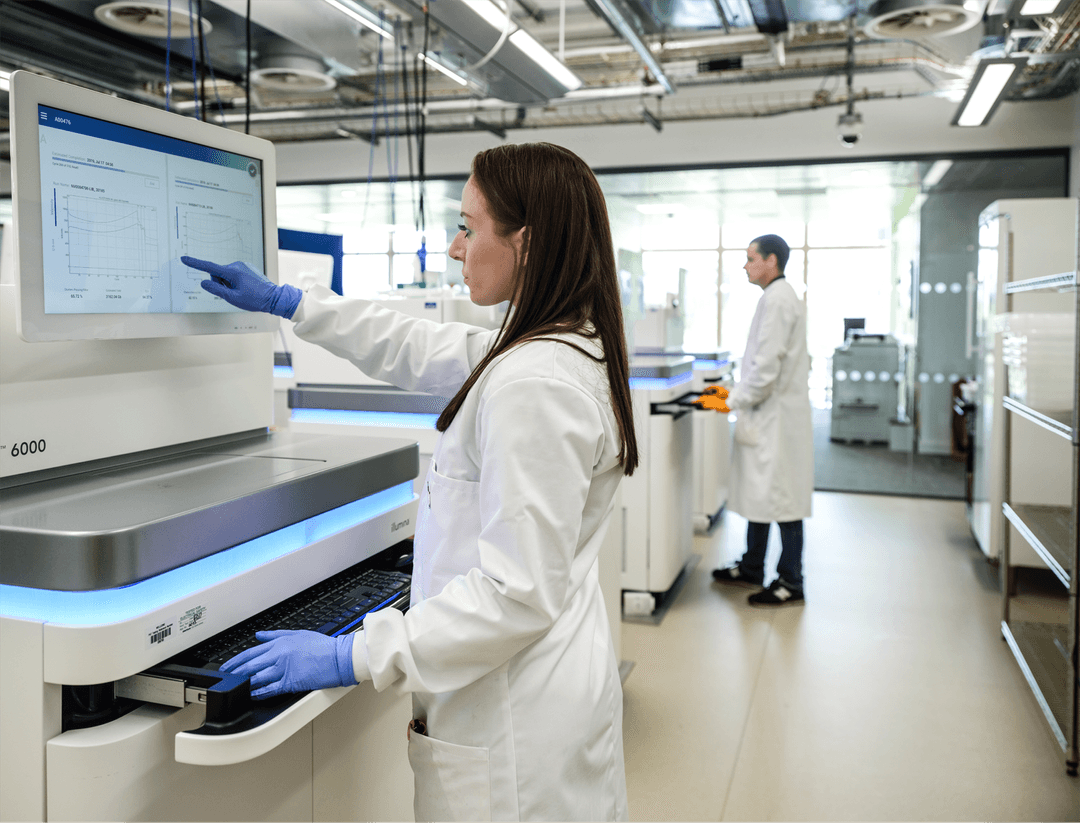
Find out how the Sanger Institute broke down traditional pathways into genomics, making work experience accessible to every young mind, regardless of location or background.
Genomics, bioinformatics and data science are shaping the future of healthcare - but for many young people, gaining real exposure to these fields has always been a challenge. Limited in-person placements, a shortage of specialist skills, and the underrepresentation of minority groups (particularly Black-heritage researchers) all make it harder for new voices to enter the sector.
That’s where the Sanger Institute's partnership with Springpod stepped in: to create an accessible, inspiring Virtual Work Experience programme that could open doors for every curious mind, no matter their location or background.
And if the student feedback is anything to go by, it worked.
Breaking barriers to entry
The challenge was clear. Traditional pathways into genomics often favour students who already know someone in the sector, live close to a lab, or have the means to travel. Young people from groups underrepresented in science have historically struggled the most.
The virtual programme flipped that on its head.
Across the country, students logged in from their bedrooms, kitchens, living rooms (anywhere they could connect) and got the chance to explore real-world genomics through interactive activities, professional insights and hands-on simulations.
The result? A cohort that was more diverse, more engaged, and more excited about science than ever.
- 67% female
- 10% other genders
- 53% from global majority backgrounds
- 13% free school meal eligible
- 9% SEND
- 6% care experienced
- 28% first-generation university hopefuls
This wasn’t just widening participation. It was opening the door properly.
“Should I actually join this industry?”
The shift in student attitudes was striking. Many came in unsure (or, in some cases, unaware) of what genomics even involved. They left with clarity, confidence and curiosity.
One student said:
“I really enjoyed how interactive and engaging the activities were, especially the hands-on investigations like the genetic variation and binary code puzzles. They made complex scientific topics feel accessible and fun. I also appreciated learning about real-world research happening at the Wellcome Sanger Institute—like the skin organoid breakthrough—and seeing how science directly connects to our everyday lives."
Another arrived with limited understanding and left with a whole new vocabulary:
“I thoroughly enjoyed learning new and fascinating content about developments in genomics, which was not an area of biology I previously had much knowledge in. Thank you to everyone for the time and effort put in to creating such interesting and accessible explanations of this content.”
The programme didn’t just inform students. It sparked something deeper: a genuine sense of possibility.
Building confidence, not just knowledge
The impact wasn’t just academic. Students finished the experience feeling more equipped and more confident to take their next steps.
Before the programme only 3% said their awareness of genomics careers was “excellent” whereas afterwards that jumped to 56%, with the rest reporting “good” awareness.
Confidence told an even stronger story, after the programme:
- 86% felt confident they could find a job in the sector
- 88% felt confident talking to an industry professional
- Likelihood to consider a genomics career rose by 11%
For many, hearing from real professionals was the turning point:
“Hearing your different journeys into genomics was really encouraging and gave me a boost of confidence that this is a path I could see myself being part of too.”
“What I enjoyed most was imagining the different career paths within genomics. Hearing directly from professionals… made the subject feel more real and relatable.”
Hands-on, even from home
While the programme was virtual, students repeatedly described feeling immersed, involved, and energised:
“The virtual lab activities we did not only improved my lab skills, they also taught me new skills I didn't previously have. I also really liked the different videos about genomic developments.”
“I enjoyed the opportunity to dive deeply into the world of genomics and data science, especially through the lens of real-world applications in biomedical research. The programme’s structured approach, with insights from experts at the Wellcome Sanger Institute, made complex topics accessible and engaging.”
Again and again, the theme was the same: the programme helped students see a future in science that felt both exciting and reachable.
A space to grow and imagine a future in genomics
Despite the challenges the sector faces, from skill shortages to lack of representation, this virtual experience showed what’s possible when access is widened and young people are given the chance to explore science on their own terms.
As one student put it:
“Thank you so much for this programme! I have learnt so much and I am very thankful for the opportunity to complete all the modules. It was very informative and I enjoyed the layout too… I am very impressed by all the careers and amazing research going on at the Wellcome Sanger Institute!”
For the Sanger Institute, this case study isn’t just about engagement numbers or satisfaction ratings. It’s about impact, real, personal, lasting impact on the next generation of scientists.
And judging by the voices of the young people who took part, that impact is already taking root.
Want to open doors for thousands of students? Get in touch!

